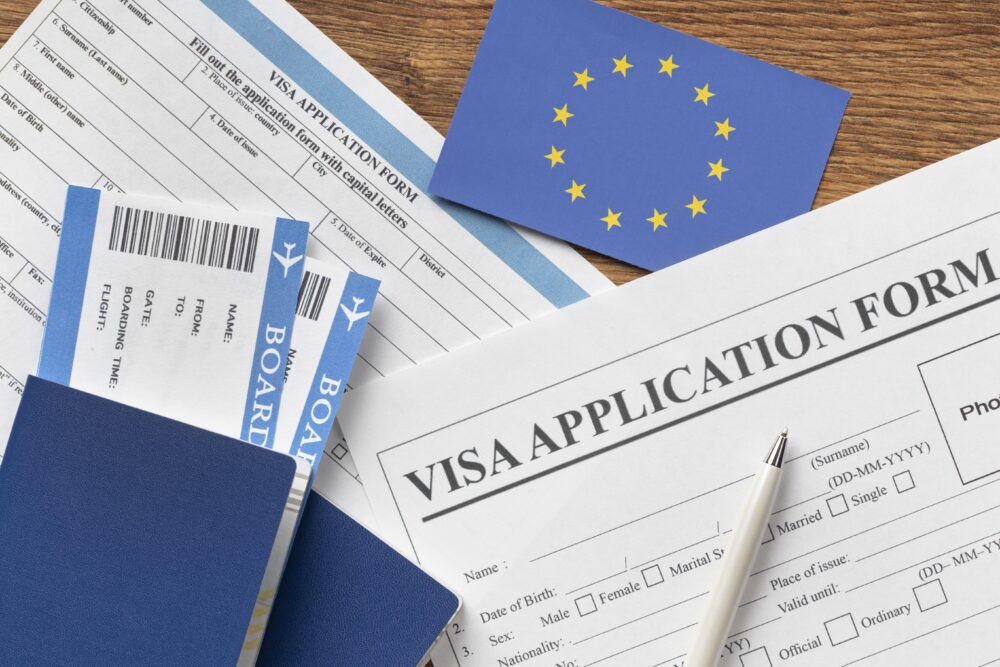


On August 7, 2025, the Government issued Decree No. 219/2025/ND-CP on the employment of foreign employees in Vietnam, officially replacing the provisions previously set out in Decree No. 152/2020/ND-CP and Decree No. 70/2023/ND-CP. The promulgation of Decree 219/2025/ND-CP takes place against the backdrop of Vietnam’s deep integration into the global economy, where demand for highly skilled foreign labor continues to rise. However, prior regulations revealed several limitations that created challenges for both companies and foreign employees.
Compared to its predecessors, Decree 219/2025 places particular emphasis on the simplification of administrative procedures, the reduction of processing times, and the expansion of exemptions from work permit requirements, thereby improving the recruitment environment and enhancing Vietnam’s ability to attract high-quality human resources.
1. Simplification of procedures and shortened processing time
One of the most significant reforms is the integration of the foreign labor demand explanation report into the application dossier for work permits(1). Under this new approach, companies are no longer required to undergo two separate procedures, thereby saving considerable time and administrative costs.
At the same time, Decree No. 219/2025/ND-CP also revises the timeline for granting work permits to foreign employees(2). Specifically:
- In cases of approval, the competent authority must issue the work permit within 10 working days from the date of receiving a complete and valid dossier.
- In cases of rejection, the authority is required to respond and provide a clear explanation within 3 working days.
Previously, under Decree No. 70/2023/ND-CP, the total processing time was 15 working days: 10 working days for the labor demand reporting procedure (3) and 5 working days for the issuance of the work permit (4). The new provisions, by consolidating procedures, are therefore more efficient and business-friendly.
In addition, Decree No. 219/2025/ND-CP introduces a streamlined interlinked process that allows for the simultaneous submission of work permit applications and applications for criminal record certificates (judicial record cards) via the National Public Service Portal(5). Under this mechanism, employers may, on behalf of foreign employees through proper authorization, submit both dossiers at the same time.
2. Expansion of exemptions from work permit requirements
The list of foreign employees exempted from work permit requirements has been significantly expanded under Decree No. 219/2025/ND-CP. Newly included categories are as follows:
- Foreign managers, executive directors, experts, and technical workers who enter Vietnam for a cumulative period of less than 90 days within one calendar year (from January 1 to December 31)(6).
- Foreign employees confirmed by ministries, ministerial-level agencies, or provincial People’s Committees to work in priority sectors, including finance, science, technology, national digital transformation, innovation, and other socio-economic development priorities(7).
This marks a substantial policy shift aimed at attracting international talent to strategic industries crucial to Vietnam’s development agenda.
Furthermore, the Decree revises notification requirements in cases where confirmations of exemption from work permit are not needed(8). Specifically, foreign employees who fall within these exemption categories are no longer required to obtain a written certification of exemption. Instead, employers must notify the competent authority responsible for issuing such certifications at least three working days prior to the foreign employee’s expected commencement of work in Vietnam:
- Chiefs of representative offices, project offices, or persons primarily responsible for the operations of international organizations and foreign non-governmental organizations in Vietnam.
- Foreign nationals entering Vietnam for a period of less than three months to offer services.
- Foreign nationals entering Vietnam for a period of less than three months to address incidents or complex technical or technological issues that affect or pose risks to production or business activities, which cannot be resolved by Vietnamese experts or foreign experts currently in Vietnam.
- Foreign lawyers who have been granted a License to Practice Law in Vietnam in accordance with the Law on Lawyers.
- Foreign nationals married to Vietnamese citizens and residing in the territory of Vietnam.
- Owners or capital-contributing members of a limited liability company with a capital contribution valued at VND 3 billion or more.
- Chairpersons or members of the Board of Directors of a joint-stock company with a capital contribution valued at VND 3 billion or more.
- Foreign correspondents engaged in journalistic activities in Vietnam with confirmation from the Ministry of Foreign Affairs.
- Family members of members of foreign representative offices in Vietnam who are permitted to work in Vietnam under international treaties to which the Socialist Republic of Vietnam is a signatory.
- Foreign nationals responsible for establishing a commercial presence in Vietnam.
- Managers, executive directors, experts, or technical workers entering Vietnam for a total period of less than 90 days within one calendar year (from January 1 to December 31).
The notification must include the following essential information: full name, date of birth, nationality, passport number, name of the foreign employer, workplace, and duration of employment.
3. New provisions on the revocation of work permits and confirmations of exemption from work permit
Articles 30 and 32 of Decree No. 219/2025/ND-CP establish clearer and more comprehensive grounds for revoking either a work permit or a confirmations of exemption from work permit. Specifically, revocation applies in the following cases:
- The underlying documents have expired;
- The foreign employees or the employer violates obligations relating to the issuance, extension, or misuse of the work permit;
- The foreign employee is prosecuted or faces criminal liability;
- The company ceases its operations;
- The sending entity issues a written notice of termination of the foreign employee’s assignment.
Previously, Article 20 of Decree No. 152/2020/ND-CP merely referred to the revocation of work permits on the general grounds of “failure to comply with the provisions of law.” This vague formulation made it difficult to determine specific revocation cases. Moreover, there was no regulation on revocation of confirmations of exemption from work permit, which often caused uncertainty in practice.
4. Deployment of information technology applications
Decree No. 219/2025/ND-CP strongly emphasizes the role of digital transformation in the administration of foreign labor. It encourages and moves toward the full digitization of the work permit process. Under the new framework, the National Public Service Portal will be developed and improved to allow for: online submission of applications, real-time information retrieval and verification, centralized data management and integrated processing of permits and related documents for foreign employees. This initiative is expected not only to reduce physical interactions and save time and administrative costs for companies, but also to enhance the accuracy, transparency, and efficiency of state management in the area of foreign labor.
Conclusion
Decree No. 219/2025/ND-CP marks a significant milestone in refining the legal framework for the management of foreign employees in Vietnam, while also delivering tangible benefits for all parties.
For foreign employees
- The reforms reduce administrative barriers and improve access to Vietnam’s labor market.
- Foreigners engaged in short-term projects (less than 90 days per year) or working in key areas such as innovation and national digital transformation are no longer required to undergo a complex work permit process.
For companies
- Companies benefit from lower administrative costs and shorter processing times in hiring foreign employees.
- The expansion of exemption categories enables companies to more easily engage experts, managers, and technicians in high-tech, semiconductor, and financial sectors – areas where Vietnam faces a shortage of highly skilled personnel.
For competent authorities
- The integration of procedures enhances oversight capacity, ensures greater transparency in licensing, and strengthens the ability to monitor and manage foreign labor.
- This reform positions Vietnam as an attractive, business-friendly destination for international talent. It also creates competitive institutional advantages in the region, particularly as other ASEAN countries are similarly easing immigration and labor regulations to attract global experts.
To ensure full compliance and avoid unnecessary legal risks, both companies and foreign employees are advised to carefully study the provisions of Decree No. 219/2025/ND-CP.
(1) Clause 18 Decree 219/2025/ND-CP
(2) Clause 3 Article 22 Decree 219/2025/ND-CP
(3) Clause 2 Article 1 Decree No. 70/2023/ND-CP amending and supplementing Clause 2, Article 4 of Decree No. 152/2020/ND-CP
(4) Clause 6 Article 1 Decree No. 70/2023/ND-CP amending and supplementing Clause 2, Article 11 of Decree No. 152/2020/ND-CP
(5) Clause 3 Article 6 Decree 219/2025/ND-CP
(6) Point a Clause 13 Article 7 Decree 219/2025/ND-CP
(7) Clause15 Article 7 Decree 219/2025/ND-CP
(8) Clause 4 Article 9 Decree 219/2025/ND-CP
Date written: 20/08/2025
Related posts:
2/ Work permit requirements for legal representatives operating a company remotely
3/ Notable to obtain a work permit for legal representative who is a foreigner
Disclaimers:
This article is for general information purposes only and is not intended to provide any legal advice for any particular case. The legal provisions referenced in the content are in effect at the time of publication but may have expired at the time you read the content. We therefore advise that you always consult a professional consultant before applying any content.
For issues related to the content or intellectual property rights of the article, please email cs@apolatlegal.vn.
Apolat Legal is a law firm in Vietnam with experience and capacity to provide consulting services related to Employment and contact our team of lawyers in Vietnam via email info@apolatlegal.com.