

The cosmetics and beauty market in Vietnam has been rapidly expanding, with consumer demand extending beyond mere beauty care to the desire for enhanced appearance, greater confidence, and self-expression. This trend has driven enterprises to explore more flexible business models to deliver products to customers faster, at lower costs, and with fewer intermediaries.
One of the common business practices today is the subdivision of imported cosmetic products for trading. However, the challenge for enterprises arises not only from economic factors but also from compliance with the legal framework. The key issue is whether such business practice is permissible under the applicable laws. This article will focus on analyzing the legal aspects of this matter.
I. Definition:
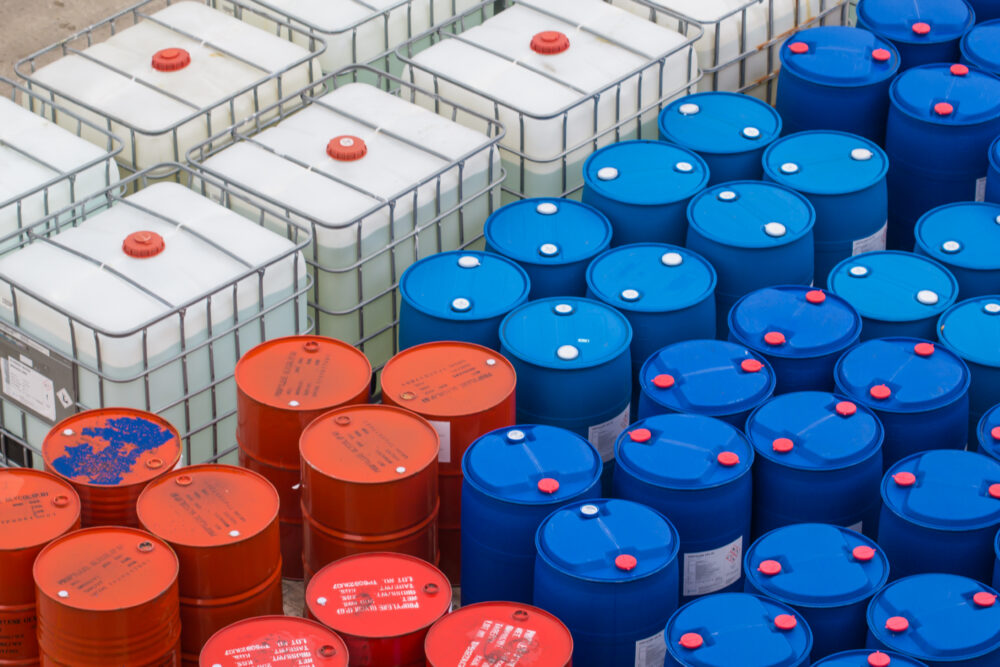
First, it is necessary to clarify the concept of “subdividing imported cosmetics for trading.” Legally speaking, there is currently no official definition of this activity under Vietnamese law. From the author’s perspective, “subdividing” may be understood as the case where an enterprise imports a large quantity of cosmetics into Vietnam (e.g., by carton, container, or other measurable units), and subsequently repackages, decants, or refills such cosmetics into smaller, separate batches or units, distinct from the originally imported goods.
It can be seen that, throughout this entire process, from importation to distribution, the nature and intended use of the cosmetics remain unchanged, except that the original quantity has been significantly reduced due to subdivision. Nevertheless, from a legal standpoint, this cannot be treated merely as a commercial trading activity. Rather, it should be regarded as a form of manufacturing, since the imported products are no longer intact in their original state but are, in essence, used as raw materials to produce the final products (in subdivided form) for circulation in the market. Consequently, enterprises must comply with and satisfy all statutory requirements applicable to domestic cosmetic manufacturing activities.
II. Conditions relating to domestic cosmetic manufacturing:
II.1. Conditions for cosmetic manufacturers:
One of the prerequisite conditions for an enterprise to be permitted to engage in cosmetic manufacturing activities is obtaining a Certificate of eligibility for cosmetic manufacturing1. To be granted this Certificate, the enterprise must satisfy the following requirements:
– Personnel requirement: The production manager must have professional knowledge about one of the following majors: Chemistry, Biology, Pharmacy or other relevant majors in order to meet job requirements.
– Infrastructure requirement:
- Its location, area, workshop and equipment must meet requirements on the production line and types of cosmetic products which will be produced by that manufacturer as described in the application dossier for Certificate of eligibility for cosmetic manufacturing;
- Raw materials, packaging materials and finished products stores must ensure the separation between raw materials, and packaging materials, and finished products, and have separate areas for storing flammable and explosive matters, highly toxic substances, discharged or recalled or returned materials or products.
– Its quality management system must satisfy the following requirements:
- Raw materials, auxiliary materials and semi-finished products which are used to manufacture cosmetic products must satisfy the quality standards adopted by the manufacturer;
- The water used in the production of cosmetic products must comply with the national technical regulations on drinking water quality promulgated by Minister of Health;
- The production process must be available for each type of cosmetic products;
- The quality of raw materials, semi-finished products, bulk products and finished products must be monitored by quality control divisions;2
An enterprise may choose to establish its manufacturing facility in the form of a factory or other legally permissible models to engage in cosmetic manufacturing. However, regardless of the form chosen, the manufacturing facility must fully comply with the statutory conditions as analyzed above in order to be eligible for operation.
In addition, with respect to operational conditions, an enterprise may also apply for a Certificate of organization satisfying principles and norms of the “cosmetic good manufacture practice” of the ASEAN Association (CGMP- ASEAN), which serves for the export demand under Circular No. 06/2011/TT-BYT. Obtaining the CGMP-ASEAN Certificate not only enhances the enterprise’s competitiveness and reputation in the market but also provides procedural advantages: in case the enterprise applies for the Certificate of eligibility for cosmetic manufacturing, the processing time will be shortened from 30 days to 05 working days, and the Department of Health will not be required to conduct an on-site inspection of the manufacturing facility.
II.2. Conditions for market circulation of cosmetics:
In principle, pursuant to Article 3 Circular 06/2011/TT-BYT, organizations or individuals which are responsible of putting the cosmetic product on the market just permitted selling cosmetic when be issued the number of cosmetic product proclamation receiving by the authority agencies as well as responsible for safety, effectiveness, and quality of product. The authority agencies shall carry out after-sales inspection when the product has been being sold in the market. Additionally, Organizations or individuals who are responsible for putting the products on the market must have the function of cosmetic business in Vietnam.
Therefore, upon completing the manufacturing stage, enterprises must carry out the cosmetic product proclamation procedure in order to circulate such products on the market, while ensuring full compliance with all statutory requirements applicable to such procedure.
II.3. Conditions for retail sale of goods by foreign-invested economic organizations:
After completing the manufacturing process, one of the key activities which the enterprise will also focus on are the distribution activities. However, not all entities are entitled to freely distribute goods, particularly in relation to retail distribution. In the case of an economic organization with foreign investment capital in Vietnam (hereinafter referred to as “FDI Vietnam”), in order to be permitted to carry out the right to retail distribution of cosmetics, FDI Vietnam must follow the statutory procedures to obtain a Business License pursuant to Clause 1, Article 5 of Decree No. 09/2018/ND-CP. If FDI Vietnam intends to establish a physical retail store for cosmetics, it must register for and obtain a Retail Outlet License pursuant to Clause 2 hereof.
III. Alternative approach for enterprises conducting business through bulk import of cosmetics:
As analyzed above, repackaging or splitting bulk imported cosmetics into smaller units for sale is a challenging business model, particularly for small and medium-sized enterprises that may not be able to fully satisfy the statutory requirements. Nevertheless, although enterprises may not subdivide the products, this does not mean that they are not permitted to import cosmetics in bulk for trading purposes.
Accordingly, where an enterprise imports cosmetics in bulk for direct business purposes, i.e., selling the imported products as they are, without any repackaging, refilling, or re-bottling, the enterprise is only required to carry out the cosmetic proclamation procedure before placing the products on the market, as analyzed in Section 2.2.
The foregoing analysis reflects the legal requirements in force at the time this article is published. As regulations may change thereafter, enterprises are advised to seek guidance from legal experts or professional advisory firms prior to implementation.
(1) Article 3 Decree 93/2016/ND-CP
(2) Article 4 Decree 93/2016/ND-CP
Disclaimers:
This article is for general information purposes only and is not intended to provide any legal advice for any particular case. The legal provisions referenced in the content are in effect at the time of publication but may have expired at the time you read the content. We therefore advise that you always consult a professional consultant before applying any content.
For issues related to the content or intellectual property rights of the article, please email cs@apolatlegal.vn.
Apolat Legal is a law firm in Vietnam with experience and capacity to provide consulting services related to International Commercial & Trade and contact our team of lawyers in Vietnam via email info@apolatlegal.com.