

1. The Era of KOLs – “One Word, a Thousand Believers”
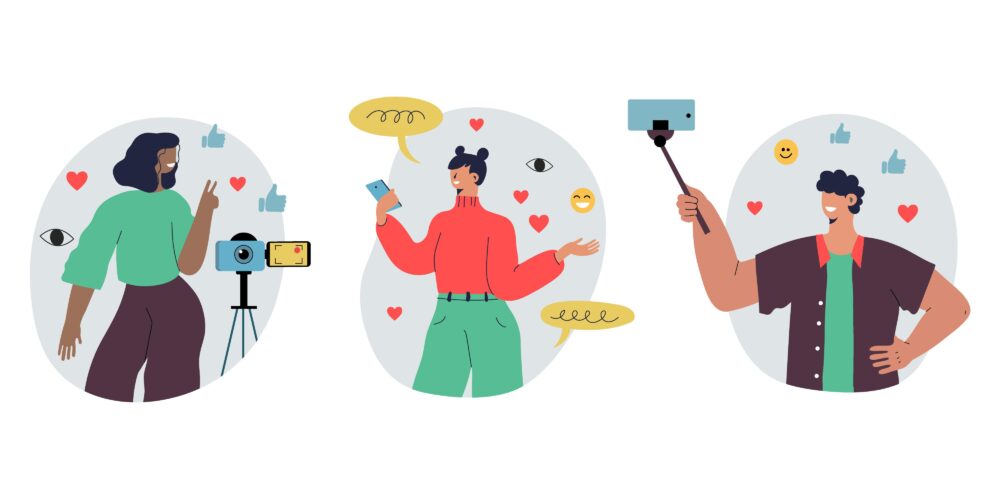
In the age of social media, KOLs (Key Opinion Leaders) and streamers are not only content creators but also influencers who shape the consumption behavior of millions of people. A single cosmetic review video can cause a product to sell out within minutes. According to a study by the University of Economics Ho Chi Minh City, more than 85% of Vietnamese consumers trust product reviews from celebrities or people they follow2. Therefore, Influencer Marketing has become the “golden strategy” for businesses in the digital era.
However, that influence can also easily expose KOLs and streamers to legal risks if they engage in false advertising, exaggerate product benefits, or promote low-quality products.
2. What does Vietnamese Law say?
Under Clause 9, Article 8 of the Law on Advertising 2012, false advertising is defined as:
“Advertising incorrectly or causing confusion about the business competence, the ability to provide products, goods and services of organizations and individuals trading and providing such products, goods and services; about the quantity, quality, prices, features, designs, package, brand name, kinds, method of service, warranty duration of the registered or announced products, goods and services.”
Advertising activities on social media are regulated by the Law on Advertising 2012 (amended in 2018) and Decree No. 38/2021/NĐ-CP (as amended by Decree No. 129/2021/NĐ-CP and Decree No. 128/2022/NĐ-CP). The law strictly prohibits any acts of false or misleading advertising regarding products, goods, or services.
Accordingly:
- Individuals who engage in false advertising may be fined from VND 60,000,000 to VND 80,000,000 and are required to remove or correct the misleading content (Clause 5, Article 34 of Decree No. 38/2021/NĐ-CP, as amended by Decree No. 128/2022/NĐ-CP);
- If the violation is committed by an organization, the fine is doubled, ranging from VND 120,000,000 to VND 160,000,000 (Clause 2, Article 5 of Decree No. 38/2021/NĐ-CP, as amended by Decree No. 128/2022/NĐ-CP).
In serious cases, offenders may also face criminal prosecution under Article 197 of the Penal Code 2015, with penalties ranging from a fine of VND 10,000,000 to VND 100,000,000, or non-custodial reform for up to 03 years, along with an additional penalty of being banned from practicing their profession for 01 to 05 years.
In particular, individuals directly involved in advertising, such as KOLs, streamers, or brand ambassadors, may also be considered violators, not just the businesses that hire them for promotions.
3. When “content” becomes “evidence of violation” and the fine line between “creative advertising” and “deceptive advertising”
In reality, there have been numerous cases where people have paid the price for engaging in “reckless advertising”:
A typical case is the Kera vegetable candy incident involving Miss Thùy Tiên, Quang Linh Vlogs, and Hằng Du Mục, which has recently become a notable example of false advertising. The Investigation Police Agency of the Ministry of Public Security has recommended the prosecution of the defendants for the offense of “Deceiving customers” under Clause 2, Article 198 of the Penal Code 2015. Those involved may face a prison sentence ranging from 01 to 05 years, a fine of up to VND 100,000,000, along with an additional penalty of prohibition from professional practice.
This case is regarded as a “wake-up call” for KOLs, celebrities, and even consumers, in a world where truth and falsehood, black and white, are increasingly blurred. In such an environment, “exaggerated” or “overhyped” advertisements can easily become evidence of criminal liability, rather than ending merely with an apology on social media.
In addition, many KOLs and streamers do not intentionally engage in deceit, they simply “act a little too much” to attract viewers. However, the law judges consequences, not intentions. A seemingly “genuine” review that is in fact paid promotion, if not tagged with #Advertisement or #Sponsored, may still be considered concealment of commercial content and a violation of consumer rights.
Advertising claims such as “lose 5 kilograms in 7 days” “completely eliminate dark spots 100%” or “recover from illness without medication” may all be subject to penalties under the Law on Consumer Protection 2023, with aggravated sanctions applied if such claims cause harm to consumers’ health or finances.
4. How to “protect yourself” in the advertising world?
From a legal perspective, both KOLs and streamers, as well as the businesses they collaborate with for advertising, are jointly liable if the promotional content is false or misleading. To protect themselves, both parties should adhere to several fundamental principles, such as:
- Verify before promoting: Only accept advertisements for products that have proper licenses and clear origins; request the business to provide legal documentation and a transparent cooperation contract.
- Clearly tag sponsored content: Paid posts or videos must be clearly tagged with #Advertisement or #Sponsored to prevent consumer misunderstanding.
- Do not exaggerate product effects: For functional foods, only use phrases such as “supports” or “helps improve”, never claim that the product can “treat” any condition.
- Respect ethical and cultural standards: Avoid using offensive images or language that violate social norms and moral values.
- Retain records and contracts: These serve as important evidence in case of disputes or administrative penalties.
At the same time, businesses cannot claim to be “uninvolved.” According to Decree No. 38/2021/NĐ-CP and Article 288 of the Civil Code 2015, in cases of false or misleading advertising, both the KOL and the brand may be subject to administrative sanctions and jointly liable for compensation if consumers suffer any damage. Therefore, brands should carefully review advertising content and clearly define legal responsibilities in their collaboration contracts with KOLs to minimize risks in case of violations (for example: “The KOL shall bear personal responsibility for any content beyond the approved script”).
5. Conclusion
In general, advertising on social media is not inherently negative, on the contrary, it serves as a driving force of the digital economy. However, creative freedom must go hand in hand with legal responsibility.
A KOL, streamer, or business that understands and complies with the law not only protects their own reputation but also builds genuine trust with the public, and that is the foundation of sustainable influence in the digital era.
Date written: 20/11/2025
Disclaimers:
This article is for general information purposes only and is not intended to provide any legal advice for any particular case. The legal provisions referenced in the content are in effect at the time of publication but may have expired at the time you read the content. We therefore advise that you always consult a professional consultant before applying any content.
For issues related to the content or intellectual property rights of the article, please email cs@apolatlegal.vn.
Apolat Legal is a law firm in Vietnam with experience and capacity to provide consulting services related to International Commercial & Trade and contact our team of lawyers in Vietnam via email info@apolatlegal.com.